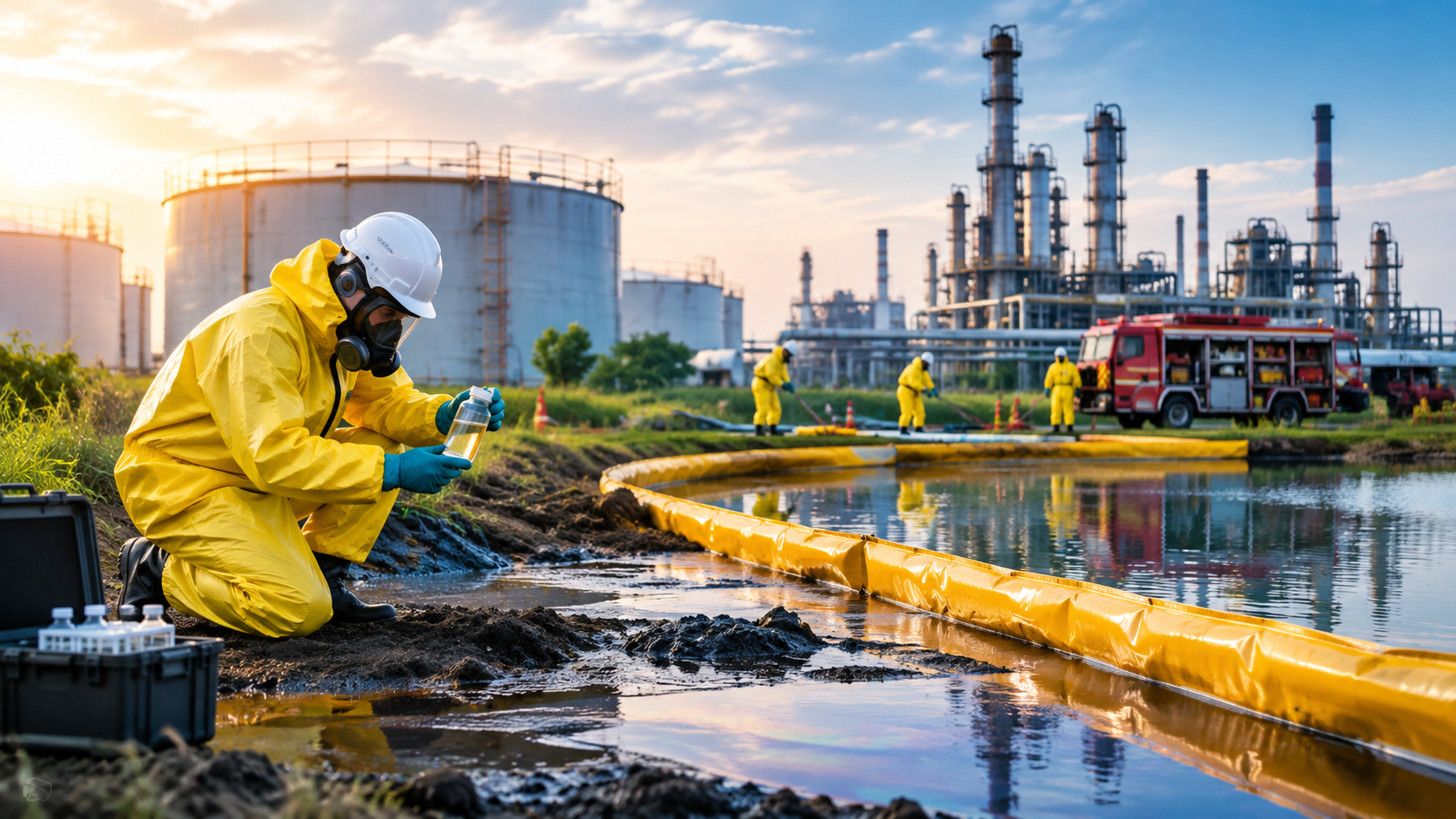
Environmental incidents can develop rapidly. A chemical release, fuel spill, equipment failure, transportation accident, or unexpected discharge can create immediate risks for people, property, and the surrounding environment.
In these circumstances, environmental emergency response is about more than cleaning up spilled material. Effective response requires rapid decision-making, appropriate containment, hazard assessment, communication, waste management, and site recovery.
Why Response Time Matters
The environmental impact of a release can change significantly depending on how quickly it is identified and controlled.
A spill that remains uncontrolled can migrate across hard surfaces, enter drainage systems, affect soil, or reach nearby water resources.
Early intervention can limit the area affected and reduce the amount of material requiring subsequent remediation.
For industrial operators, response time therefore becomes an important component of environmental risk management.
Industrial Incidents Can Create Multiple Challenges
An environmental emergency rarely involves a single issue.
A release may simultaneously create:
- Worker safety concerns
- Fire or chemical hazards
- Environmental contamination
- Production interruptions
- Waste management requirements
- Regulatory reporting considerations
- Public or community concerns
- Equipment contamination
The response must therefore address the immediate incident while also considering what happens after the release has been contained.
Containment Is Only the Beginning
Stopping the spread of released material is an important priority, but containment does not necessarily resolve the environmental problem.
Contaminated absorbents, soil, water, equipment, and other materials generated during an emergency may require characterization and appropriate disposal.
This means emergency response and waste management are closely connected.
A response strategy should account for how contaminated materials will be collected, stored, transported, treated, or disposed of once the immediate incident has been stabilized.
Preparedness Reduces Uncertainty
Industrial facilities cannot predict exactly when an environmental emergency will occur, but they can prepare for different scenarios.
Effective preparedness may involve identifying potential release sources, establishing emergency contacts, maintaining response equipment, defining escalation procedures, and ensuring personnel understand their responsibilities.
Businesses can also evaluate historical incidents and near misses to identify recurring vulnerabilities.
Preparedness becomes particularly important for facilities handling chemicals, fuels, hazardous materials, or processes where an uncontrolled release could have significant consequences.
Emergency Response and Business Continuity
Environmental incidents can interrupt production as well as create environmental liabilities.
Contaminated work areas may need to be isolated. Equipment may become unavailable. Employees may need to be relocated. Operations may remain suspended until the area is considered safe.
A rapid and coordinated environmental response can help reduce the duration and scale of these disruptions.
For industrial businesses, environmental emergency planning should therefore be considered alongside business continuity and operational risk management.
Managing the Transition From Emergency to Recovery
Once an incident has been stabilized, attention shifts toward recovery.
This may involve detailed assessment of affected areas, collection of contaminated materials, environmental sampling, waste disposal, cleaning, and remediation.
The transition between emergency response and longer-term environmental restoration should be carefully managed.
A temporary containment solution may not be sufficient if contamination remains in soil, structures, drainage systems, or other areas of the facility.
The Importance of Specialist Environmental Support
Environmental emergencies often involve circumstances that cannot be addressed effectively through routine cleaning services.
Specialist providers can bring experience in spill response, contaminated material handling, waste management, environmental assessment, and cleanup activities.
TAS Environmental Services provides environmental emergency response support for incidents requiring rapid intervention and coordinated environmental management.
Building a More Resilient Emergency Strategy
The strongest emergency response strategies are developed before an incident occurs.
Businesses should understand their highest-risk activities, identify likely environmental scenarios, establish response contacts, and ensure suitable procedures are available.
Regular review is also important because facilities change. New chemicals, equipment, production processes, and site modifications can introduce new environmental risks.
Environmental emergency response should therefore be treated as an ongoing component of industrial risk management rather than an isolated service used only after an incident.
When an unexpected release occurs, the ability to respond quickly and appropriately can reduce environmental impact, limit operational disruption, and support a more controlled recovery.