Industrial facilities depend on chemicals, fuels, process liquids, and other materials to maintain production. Although these materials are often essential to daily operations, accidental releases can create environmental hazards and disrupt business activities. A leaking storage tank, damaged transfer line, chemical spill, or transportation incident can quickly develop into a situation requiring specialized assistance.
Environmental emergency response involves managing these incidents to protect people, control the release, limit environmental impacts, and coordinate appropriate cleanup activities. For industrial businesses, preparation before an incident occurs is an important part of effective environmental risk management.
Understanding Environmental Risks at Industrial Sites
Environmental incidents can originate from equipment failure, human error, severe weather, transportation accidents, or unexpected changes in operating conditions. The potential consequences depend on the substance involved, the quantity released, and the surrounding environment.
For example, a fuel leak near a storm drain may allow petroleum products to enter a drainage system. A chemical release inside a production building may require isolation of the affected area and specialized material recovery. Flooding at an industrial property can also move stored chemicals, waste, and contaminated sediment beyond their original locations.
Facilities should understand where these risks exist and how a release could affect employees, nearby properties, drainage systems, soil, and water resources.
Developing an Effective Emergency Response Plan
An emergency response plan establishes how personnel should report an incident, communicate hazards, activate response resources, and follow the facility’s established safety procedures.
The plan should reflect the site’s actual operations, including the chemicals stored, equipment used, and environmental features surrounding the property. Maps showing storage tanks, transfer lines, drainage routes, access points, and sensitive areas can help responders understand site conditions.
Businesses should maintain current emergency contacts and establish a clear process for contacting internal response personnel, external emergency services, and environmental response contractors when needed.
Employees should understand their roles and the limits of their training. They should not attempt to contain or clean up hazardous materials unless they are trained, equipped, and authorized to do so.
Why Early Containment Matters
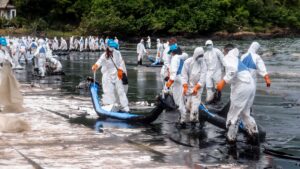
When a release occurs, the initial response can influence how far the material spreads and how much cleanup work becomes necessary. Appropriate actions may include securing the affected area, stopping the source when it can be done safely, protecting nearby drains, and deploying suitable containment measures.
The correct approach depends on the material and the circumstances. Certain chemicals can react with water or other substances, while flammable materials may create additional fire and explosion hazards. Response methods must therefore be selected based on a proper hazard assessment.
Professional environmental responders can assess the situation, establish suitable containment measures, recover released material, and coordinate the next stages of cleanup. Their work may also involve air monitoring, sampling, contaminated material removal, and waste management, depending on the incident.
Coordinating Cleanup and Waste Management
After the immediate hazard has been controlled, businesses may need to remove contaminated soil, absorbents, debris, liquids, or other materials generated during the response.
These materials must be evaluated to determine the appropriate handling, transportation, treatment, and disposal requirements. The management route depends on the material’s characteristics and applicable regulations.
Coordination between emergency response contractors, waste management providers, facility personnel, and environmental consultants can help maintain continuity throughout the cleanup process.
Businesses should also preserve relevant incident records, including information about the release, response actions, waste movements, and any required notifications. These records can support subsequent investigation and improvements to the emergency plan.
Planning for Recovery and Operational Continuity
An environmental incident can affect production schedules, equipment availability, site access, and customer commitments. Recovery planning should therefore consider both environmental cleanup and the practical requirements for returning the facility to normal operations.
Before work begins, businesses should establish the cleanup objectives, identify dependencies between contractors, and determine what inspections or verification activities may be needed before affected areas are reused.
Following the incident, a review of the causes and response process can reveal opportunities to improve equipment maintenance, storage arrangements, employee training, and emergency procedures.
Working With an Environmental Emergency Response Provider
Businesses should identify appropriate response resources before an emergency occurs. Relevant considerations include geographical coverage, experience with the materials handled at the site, equipment availability, safety procedures, and the ability to coordinate cleanup and waste management.
TAS Environmental Services provides environmental emergency response services with 24/7/365 availability. Its stated capabilities include spill containment, hazardous material response, disaster recovery, incident assessment, and coordination of remediation activities.
Industrial facilities can learn more about TAS Environmental Emergency Response services and discuss response planning before an incident occurs.